
BUSINESS
The Iran War’s $33.4 Billion Bill Leaves Empty Missile Racks
A Pentagon inspector general report priced Operation Epic Fury at $33.4 billion through June, mostly in munitions the U.S. cannot restock until 2030.

A Pentagon inspector general report released Sept. 14 put the cost of Operation Epic Fury at $33.4 billion through late June, with $22.3 billion of that already spent on munitions. The tally covers the joint U.S.-Israeli campaign from Feb. 28 through June 30 and leaves out repairs to bases hit by Iranian strikes.
Acquisition officials told investigators those rounds created strategic inventory shortfalls. The plants that pour solid rocket motors cannot refill the racks on the same clock the war emptied them.
The Watchdog Priced Four Months at $33.4 Billion
The Department of War inspector general, led by Platte B. Moring III, issued its first quarterly report to Congress on Operation Epic Fury after the Council of the Inspectors General on Integrity and Efficiency named the office Lead IG on May 12. The 44-page paper is the first mandated public accounting of what the campaign cost the Pentagon, the State Department, and other agencies through June 30. The full mission statement, the inspectors noted, remains classified.
The Office of the Under Secretary of War (Comptroller) estimated the price at $33.4 billion as of June 29. That sum is three buckets, and munitions dwarf the other two. The acting comptroller, Jules Hurst III, had already told lawmakers the munitions line was the figure he trusted most.
THE $33.4 BILLION SPLIT
| Cost bucket | Amount |
|---|---|
| Cumulative obligations | $7.4 billion |
| Expended munitions | $22.3 billion |
| Equipment losses | $3.7 billion |
| Total as of June 29 | $33.4 billion |
Infrastructure damage is outside that total because the department has not settled how it will rebuild, or how much partners will pay. State Department evacuation costs for staff, families, U.S. citizens, and eligible third-country nationals added $79.2 million on a separate line. Among the operating costs the inspectors did count were airlift at $929.6 million, the Flying Hour Program at $691.1 million, mission and other ship operations at $647.7 million, base support at $405.0 million, and maneuver units at $385.3 million.
Through June 30 the campaign killed 11 U.S. service members and wounded 417. Those human costs sit beside the hardware bill, and they are not priced in the $33.4 billion.
HOW THE PRICE TAG CLIMBED
- Feb. 28, 2026: Joint U.S.-Israeli strikes open Operation Epic Fury.
- April 2026: Acting comptroller Jules Hurst III tells the House the campaign has obligated about $25 billion, most of it munitions.
- May 12, 2026: Hurst’s estimate rises to $29 billion, and the inspector general is named Lead IG for the operation.
- June 29, 2026: The comptroller’s office puts the cost at $33.4 billion.
- July 21, 2026: Defense Secretary Pete Hegseth tells the Senate Appropriations Committee the war has cost $37.5 billion.
- Sept. 15, 2026: The Congressional Budget Office, in a letter requested by Rep. Brendan Boyle of Pennsylvania, estimates $38 billion through Aug. 1.
CBO built that later figure without Pentagon data. The department, the budget office said, did not answer its requests, so the estimate rests on public reports and government databases and still omits base repairs.
$22.3 Billion Bought Missiles That Are Already Gone
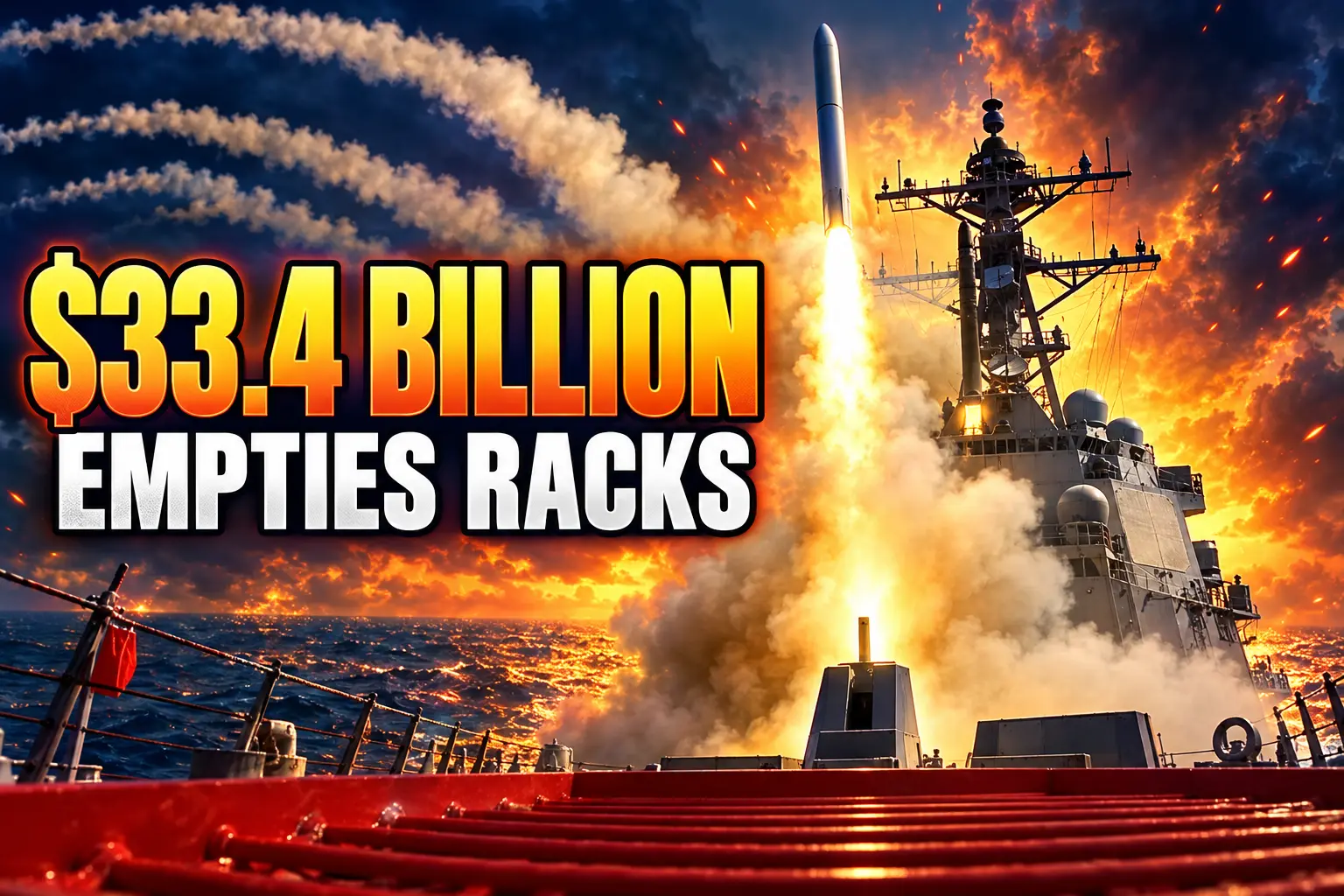
About two-thirds of the inspector general’s $33.4 billion is munitions already fired. That $22.3 billion equaled 62 percent of the $35.7 billion fiscal 2026 request for missiles and munitions, a single campaign drawing down more than three-fifths of a year’s planned buy before summer ended. Replacement value, not original purchase price, is the basis the budget office used for the munitions line, which is why the number reads like a restock invoice.
The munitions expenditure in OEF has resulted in strategic inventory shortfalls and revealed industrial base bottlenecks for munitions resupply.
Office of the Under Secretary of War for Acquisition and Sustainment, Lead Inspector General report
President Donald Trump and Hegseth had spent the summer denying that the war had punched a hole in U.S. stocks. Trump wrote that the country held virtually unlimited mid- to high-grade ammunition and was producing more elite weapons than at any time in its history, with Patriots, THAAD, Tomahawks, and Standard Missiles moving daily. The acquisition office’s language in the inspector general’s report is the first official public notice that the department’s own buyers do not share that calm.
The two claims can sit in the same building. Factories can run extra shifts and still deliver into a magazine that the opening months already drained. Record output on a peacetime line does not refill a wartime rack in 2026. The constraint is how long a motor, an explosive fill, and a skilled crew take, not how loud the press release is.
Why Tomahawks Fired in February Arrive in 2030
Mark F. Cancian, a senior adviser at the Center for Strategic and International Studies, finds that the Tomahawks used in the opening weeks will not restore Tomahawk stocks back to prewar levels by late 2030, because the Navy’s 785-round fiscal 2027 order faces a 34-month lead time and does not begin arriving until March 2030. Hegseth has said replenishment will take months and years, depending on the weapon. Cancian’s delivery charts match that warning.
CSIS counts 1,000-plus Tomahawks expended in the Iran war. Navy procurement of the missile averaged 86 rounds a year across fiscal 2015 through fiscal 2026, and recent annual output sat under 200 because earlier orders were small. Existing contracts start replacing what was fired, Cancian writes, and still fall short of a full prewar rebuild until the fiscal 2027 buy lands.
HOW LONG THE MAGAZINE STAYS LOW
| Weapon | Fiscal 2027 request | CSIS restock to prewar |
|---|---|---|
| Tomahawk cruise missile | 785 Navy rounds | Late 2030 |
| THAAD interceptor | 857 | End of 2029 |
| Patriot PAC-3 MSE | 3,203 | Deliveries start May 2029 |
THAAD is on a similar lag. The Army’s 857-round fiscal 2027 request is scheduled to start arriving in mid-2029 and to finish replacing Iran-war use by the end of that year. Budget documents imply production at the current surge rate of 96 interceptors a year. Lockheed Martin plans to lift that capacity to 400 a year once extra tooling is in place, a change that helps later orders, not the rounds already gone.
Patriot PAC-3 MSE production sits near 650 interceptors a year, with about half of deliveries going to the United States and the rest to allies. U.S. buys over the past decade averaged 225 a year, so older contracts will not close the gap. The 3,203 missiles in the Army’s fiscal 2027 request are the rebuild, and they are projected to start delivery in May 2029. Japan is owed 400 Tomahawks, Australia more than 200, and the Netherlands 175. Those allied queues compete with the same slow line.
The Factories Cannot Pour Motors Fast Enough
Acquisition officials named the bottlenecks in plain industry terms. Money is not the binding limit. Lead time is. Fiscal 2027 can triple a line item and still wait years for the first crate, because a rocket motor plant does not appear when a budget lands.
THREE PRODUCTION BOTTLENECKS
- Solid rocket motors: Motor casings and grains set the pace for Tomahawk, Patriot, THAAD, and Standard Missile output, and extra cash does not shorten the cure and test cycle.
- High-grade explosives and propellants: Fill and grain supply is tight across the same families of weapons, so offensive cruise missiles and defensive interceptors share one shortage.
- Skilled manufacturing labor: The plants cannot hire and qualify crews as fast as the campaign fired rounds, which caps how quickly new bays actually produce.
The department told inspectors it is trying to shorten buying and production lead times and to stockpile critical materials, components, and selected munitions. Officials also warned that adding capacity takes significant lead time. That is the same gap CSIS has been mapping since spring: a war that spends missiles in weeks, against an industrial base sized to deliver them in years.
Ukraine transfers did not create that math. High-intensity use across several fronts, including the June 2025 Israel-Iran fighting, the later Iran campaign, and standing allied demand, outran what the motor and energetics base can sustain. The shortage was predicted before the first February salvo. Chairman of the Joint Chiefs Gen. Dan Caine had flagged munitions depletion as a risk of a full-scale Iran fight. The inspector general’s paper is the receipt.
Iranian Strikes Hit Bases From Kuwait to Jordan
The $3.7 billion equipment-loss line is the other half of what four months took off the books. Inspectors wrote that Iranian strikes damaged and destroyed hundreds of buildings and structures at U.S. bases in Kuwait, Bahrain, Qatar, the UAE, Saudi Arabia, Iraq, Oman, and Jordan. The $33.4 billion figure still does not price those repairs. Last week’s overnight damage in Jordan, reported after the inspectors’ June 30 cutoff, means the next quarterly paper will add more.
AIRCRAFT LOST OR DAMAGED THROUGH JUNE 30
- F-15 fighters: Four destroyed.
- F-35: One damaged, the first of the type hit by enemy fire in this campaign.
- KC-135 tankers: Seven damaged, several of them struck on the ground.
- MQ-9 Reaper drones: Up to 30 destroyed.
Those losses sit inside the $3.7 billion equipment total, which is replacement value for jets, drones, and other gear, not the hangars and piers around them. The Navy had earlier downplayed damage at Naval Support Activity Bahrain. The inspector general’s country list puts that base in a wider pattern of hits across the Gulf and the Levant, and it is why the next cost update will be larger even if the shooting slows.
Lockheed’s Rebuild Calendar Runs to 2030
Contractors are being paid to close the hole, on a calendar that still ends late in the decade. In January Lockheed Martin signed a framework agreement to quadruple THAAD output from 96 interceptors a year toward 400. A later seven-year award of up to $35 billion backs that climb. A separate Lockheed deal worth up to $58.6 billion is meant to take PAC-3 MSE production from roughly 600 interceptors a year to 2,000 by 2030, a 233 percent capacity rise, with a new munitions center in Camden, Arkansas, in the plan.
RTX, the Tomahawk maker, has a Raytheon target of more than 1,000 Tomahawks a year, plus AMRAAM output above 1,900 and SM-6 above 500. Those are capacity goals, not 2026 deliveries. Jerry McGinn, who directs the CSIS Center for the Industrial Base, notes that the Patriot PAC-3 interceptor request jumped 839 percent, from 341 in fiscal 2026 to 3,203 in fiscal 2027. THAAD asks rose from 37 to 857. The Navy Tomahawk request of 785 sits against 57 in fiscal 2026. The paper spike is real. The crates are not.
Cheaper weapons are supposed to arrive sooner. The Air Force Family of Affordable Mass Missile program seeks more than 27,000 air-launched cruise missiles over five years. The Low-Cost Containerized Missiles effort aims for some 10,000 ground-launched rounds by the beginning of 2030. The Drone Dominance Program is a $1.1 billion push to field some 340,000 small drones by the end of 2027. Those lines matter for a future mix. They do not put a PAC-3 back on a Gulf launcher in 2026.
In June the White House sent Congress an $87.6 billion supplemental that included $21 billion to replenish munitions and $17.3 billion for operating costs. Congress had not, as of the inspector general’s writing, passed a dedicated war appropriation that matched the burn. The $33.4 billion already spent is the bill while that argument continues.
A Pacific Fight Would Open on a Half-Empty Magazine
CBO’s Sept. 15 letter is the later snapshot, and it is harsher on interceptors than on the dollar total. The office put Pentagon costs at $38 billion through Aug. 1 and said replacing expended munitions accounts for $21.7 billion of that, including $13.1 billion for interceptors, $7.3 billion for land-attack cruise missiles, and $1.2 billion for other munitions. If fighting stays at the May and June level, another month costs about $2 billion. At July’s intensity, the monthly figure is $3 billion.
CBO’S RUNNING TALLY
- Through Aug. 1: About $38 billion in Pentagon costs, still excluding damaged bases.
- Monthly burn: About $2 billion at May-June intensity, or $3 billion at July’s level.
- Interceptor hole: One-half to two-thirds of certain interceptor stocks used since June 2025, across Epic Fury and Operation Midnight Hammer.
- Rebuild clock: At least five years to put those interceptor inventories back, even if production rises.
Cancian’s earlier warning was that the United States still had enough munitions for plausible Iran scenarios, and that the risk sat in a Western Pacific fight where the same Tomahawks, Patriots, and THAAD rounds would be needed on a shorter timeline. CBO now states the China problem in budget language: having used a large share of the missile-defense inventory against Iran, the department has fewer interceptors on hand for a conflict over Taiwan. The $33.4 billion is the invoice for four months. The empty cells in the Mk 41 launchers, and the five-year interceptor clock, are what that invoice bought.

A 2018 Sabotage Law Now Bars Claude From the Pentagon

The Iran War’s $33.4 Billion Bill Leaves Empty Missile Racks

XRP Faces the CLARITY Vote Inside a Resistance Trap

Oracle Sends Same-Day Layoff Emails After a Cloud Boom

Derrick Henry Passes Allen for Third in Rushing TDs

Trend Micro’s AI Boom Cuts Its 2026 Operating Profit

Apple Freezes the iOS 27 Public Beta Before the Event

US-China AI Safety Talks Rest on a No-New-Law Pact

GPT-6 Astra Ships as OpenAI’s Scientist Urges Caution

An Oral DHB Prodrug Clears Mouse Tumors With PD-1
-
 NEWS4 weeks ago
Trend Micro’s AI Boom Cuts Its 2026 Operating Profit
-
 NEWS1 month ago
Apple Freezes the iOS 27 Public Beta Before the Event
-
 NEWS3 weeks ago
US-China AI Safety Talks Rest on a No-New-Law Pact
-
 NEWS3 weeks ago
GPT-6 Astra Ships as OpenAI’s Scientist Urges Caution
-
 NEWS4 weeks ago
An Oral DHB Prodrug Clears Mouse Tumors With PD-1
-

 NEWS4 weeks ago
Bell Wins the Southern 500 and Closes to 12 Points
-

 NEWS4 weeks ago
Hafner Bets World Models Can Skip the Robot Data War
-

 NEWS3 weeks ago
AI Notetaker Suits Leave Meeting Hosts Holding the Risk