
NEWS
Airborne DNA Identifies Burglars and People Never There
Airborne DNA in kitchen air named mock burglars 30 minutes after they left, and it also named people who never went inside.

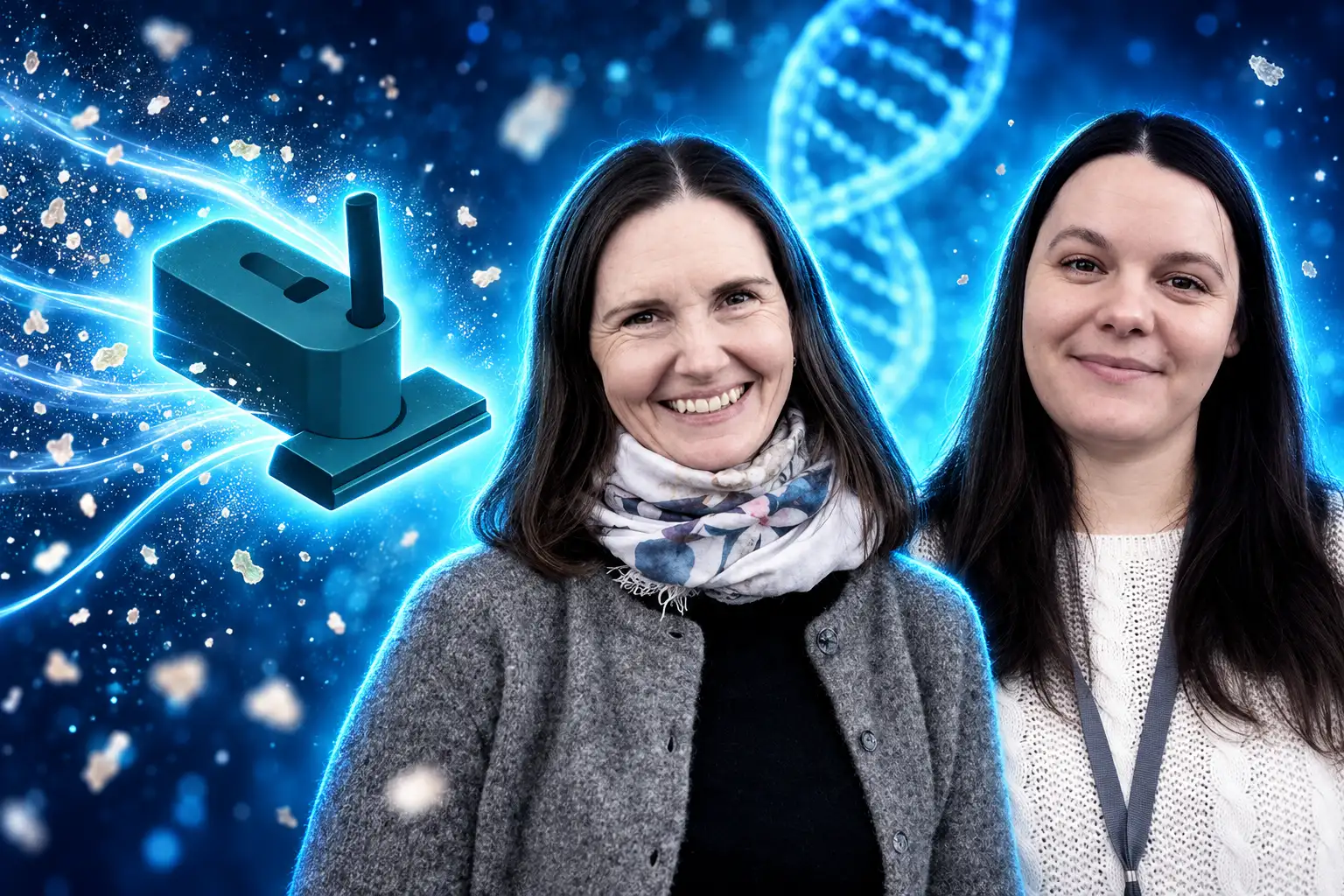
Mock burglars who spent 15 minutes in strangers’ kitchens were identified from airborne DNA collected 30 minutes after they left. Chiara Fantinato’s team at Oslo University Hospital tested 22 homes, split between Oslo and Adelaide, and published the work in Forensic Science International: Genetics.
The same filters also returned DNA from people who had a better excuse than theft, including past visitors and, in some runs, the scientists in protective gear who had come to collect the air.
A 15-Minute Kitchen Job Left a Name in the Air
The intruders had never been in those houses. They were asked to behave like burglars for 15 minutes, opening drawers and cupboards, then to get out. The team waited 30 minutes, the delay they used as a stand-in for the time it takes investigators to arrive, and only then switched on the sampler in the kitchen.
Fantinato has described the device as basically a vacuum cleaner. It ran for a couple of hours. Material from the filter was treated like any other forensic sample and compared with reference profiles from the residents and from the people who had played the thief.
Ecologists have pulled this kind of trace, environmental DNA, out of rivers, soil and air for more than 20 years, using it to find Burmese pythons in the Florida Everglades and to survey what actually lives in Loch Ness. Fantinato, a postdoctoral researcher at Oslo University Hospital, spent her doctorate asking whether the same cloud of skin, dandruff and saliva could serve a police lab.
The burglary paper, article 103618 in volume 87 of the journal, is the first time that question has been run as a staged break-in in ordinary homes. Co-authors include forensic geneticist Peter Gill and senior researcher Ane Elida Fonneløp in Oslo, with Emily Bibbo, Mariya Goray and Duncan Taylor of Flinders University and Forensic Science SA, and Roland van Oorschot of Victoria Police.
Oslo Recovered the Intruder in 9 of 11 Homes
Two laboratories each worked 11 households and, between them, took 391 samples from 22 households, drawing air, dust and surface swabs. On a quiet day, with the residents just gone, the air mainly named the people who lived there. After the mock break-in, the air named the stranger too, and it did so at very different rates in the two cities.
THE OSLO AND ADELAIDE SPLIT
| Location | Homes tested | Intruder found in kitchen air |
|---|---|---|
| Oslo | 11 | 82% (9 homes) |
| Adelaide | 11 | 36% (4 homes) |
The paper does not pin that gap on a single cause. The authors point to occupancy, how much DNA different people shed, how clean the rooms were, and the weather inside the house. Control samples taken before the staged visits did not pick up the later intruders, so the names that appeared after the 15-minute job were not leftovers from some other test.
Dust told a slower story. It was good at listing residents and people who had visited in the past, and poor at catching someone who had been in the kitchen for a quarter of an hour. Air, in the Norwegian homes, did that job more often than a swab of a drawer front.
The Sampler Is Basically a Vacuum Cleaner
A human adult sheds about 1,000 skin cells per square centimetre each hour, which adds up to billions of cells a day. Many of those flakes are smaller than the holes in ordinary cloth, so they pass through a shirt and hang in the room. Talking, coughing and sneezing add more. Clothing that has already picked up someone else’s cells can shed that DNA too, which is how a profile can arrive with a person who was never attached to it.
HOW DNA GETS INTO ROOM AIR
- Skin flakes: Dead outer cells detach all day and drift through fabric into the room.
- Dandruff and saliva: Both ride as small particles and can carry enough DNA for a laboratory profile.
- Stirred dust: Walking, opening cupboards or running a sampler can lift old material back into the air.
- Other people’s clothes: Cells caught on a jacket or a glove can fall off in a room the wearer is visiting for the first time.
The Oslo group collects that cloud with an AirPrep ACD220, a cub-shaped electret-filter sampler from InnovaPrep. In the 2022 office tests the unit ran for two hours at 200 litres a minute. The burglary work used the same class of machine in kitchens after the 30-minute wait. Manufacturer papers set the Cub’s flow at 50, 100 or 200 litres per minute.
Gloves and wiped surfaces, the precautions a careful thief already uses, do not empty the air. That is the point of the method, and it is also the problem. If DNA can be in a room without a hand ever touching a handle, a match stops being a simple story about who opened the drawer.
A Guest List That Lasts for Years
Air is the short clock. Dust is the long one. In a January 2025 conversation at the University of Oslo, Fantinato and Fonneløp said they can still recover DNA that had sat in dust for two years. Fonneløp also said crime-scene teams would have to arrive fast if they wanted the airborne fraction, because that plume does not wait around the way settled dust does.
The group had already watched that split inside its own building. In Scientific Reports on 4 November 2023, they compared air and dust from offices, meeting rooms and forensic laboratories against a staff reference list.
THE 2023 OFFICE AND LAB TALLY
- Air yield: 40 samples, median 0.1 ng of DNA, with 65% (26) coming back as mixtures.
- Dust yield: 144 samples, median 2.3 ng, with 91% (131) showing four or more people.
- Blank air: 7.5% (3) of the air samples gave no profile at all.
- Staff file: 55 of 64 people in the building consented to sit in the comparison database.
Those rooms included five laboratory areas that are supposed to stay clean enough for casework. Detectable human DNA was still in the air and the dust. The 2023 paper treated that as a contamination warning as much as a new lead: the same sensitivity that maps who used an office can smear a sample that was never meant to include the analyst.
Combined with dust and surface swabs, the 2026 kitchen air added names of legitimate occupants, including people who had visited earlier and were not in the house during the test. The filter is a guest list. It is not a timestamp.
Even the Collectors Turned Up in the Filters
The burglary team wore full protective gear and still found some of their own DNA in the vacuumed material. They had tried not to. The method was sensitive enough to defeat that effort, which is a finding, not an anecdote on the side.
It’s an investigative tool. Like other types of DNA evidence, it’s just part of the puzzle.
Chiara Fantinato, postdoctoral researcher, Oslo University Hospital
Fantinato has said air samples are unlikely ever to be reliable enough to stand as the last proof of guilt. Different people shed different amounts of DNA, and labs do not yet share a single way of collecting or reading the airborne fraction. Until those gaps close, a name in the kitchen air is a lead that still needs the rest of the case.
That caution is not theoretical. Trace DNA on objects has already put people in rooms they never entered. In one California investigation, paramedics carried a patient’s DNA onto a later crime scene, and the patient was charged with a murder committed while he was in hospital. Air sampling makes that class of mistake easier, because the collector is now gathering whatever is floating, not only what is stuck to a door handle.
What Airborne DNA Cannot Tell a Jury
A profile from kitchen air can support the claim that a person’s cells were in that volume of air. It cannot, on its own, say when those cells arrived, whether the person opened a drawer, or whether the cells rode in on someone else. Movement through a house stirs old dust. A coat can import a third party. The 2026 paper records all of those routes.
WHAT WE KNOW
- Short stay, short wait: After 15 minutes in a kitchen and a 30-minute delay, air can still yield the visitor in a controlled house.
- Dust is slower: Household dust listed residents and earlier visitors and rarely caught the brief intruder.
- Collectors leak: Protective clothing did not keep the sampling team out of their own filters.
WHAT IS UNCONFIRMED
- The city gap: Why Oslo beat Adelaide remains an open list of climate, cleaning, occupancy and lab practice.
- Shedder status: Touch tests do not yet map cleanly onto how much DNA a person dumps into air.
- Real delays: The method has not been shown on a genuine burglary, or after a wait longer than the 30-minute stand-in.
Juries already treat a DNA match as a place-and-time story. Airborne collection will feed that habit unless someone in the room is prepared to say, every time, that a name in the air is not a confession and not a clock.
Fantinato Calls It Part of the Puzzle
The Oslo programme did not begin in a stranger’s kitchen. It began in the group’s own corridor.
THE OSLO AIR DNA TIMELINE
- 2022: Fantinato, Gill and Fonneløp report that indoor air can yield full DNA profiles from indoor air in office tests with the ACD220.
- 4 November 2023: Scientific Reports publishes the occupancy study that finds DNA even in forensic laboratories and treats dust as a record of who used a room.
- January 2025: Fantinato and Fonneløp describe staged kitchen burglaries still being written up, and Fonneløp says the method raises ethical questions, including workplace checks on who entered a room.
- 2026: Forensic Science International: Genetics publishes the 22-home burglary paper as article 103618.
Fonneløp’s short version of the ethics problem is practical. To turn a floating profile into a name, investigators already need that person in a reference file, and they need a laboratory that can handle mixed, low-level samples. The method is not a kit a manager can plug into an office doorway. It is also not nothing. A despot with a database and a lab could, in principle, ask the air who met in a room after everyone had gone.
Fantinato’s group has spoken to police forces about using the work. She has also said it is still too early to put the method onto real cases. The missing pieces are the ones the Adelaide numbers already hint at: people do not shed equally, houses do not hold DNA equally, and two careful laboratories, given the same script, did not recover the stranger at the same rate.
Frequently Asked Questions
How Does an Air Sampler Collect Human DNA?
The AirPrep Cub draws room air through a dry electret filter at a chosen flow of 50, 100 or 200 litres a minute, and at 200 litres a minute it takes in about one cubic metre of air every five minutes, enough, the maker says, to put a typical room through the filter in four hours of continuous running. Timed modes on the unit include 30 minutes, one hour, two hours and continuous. DNA is then washed off the filter and typed with the same short tandem repeat kits a crime laboratory already uses on swabs.
Why Do Some People Leave More DNA Than Others?
The 2023 Oslo occupancy study assigned people an environmental shedder status, a measure of how much of their DNA turns up in a room they occupy even when they have not been asked to touch a particular surface. That trait is not the same as the older “touch shedder” score from handshake tests, and it varies with time in the room, clothing and how much the air is disturbed, which is one reason two visitors can leave very different traces after the same 15 minutes.
How Much DNA Can a Single Dandruff Particle Carry?
A single dandruff particle has been measured at 0.8 to 16.6 ng of DNA, a range the 2023 paper cites as part of the bioaerosol people shed without touching anything. That is already in the zone a modern forensic kit can use, which is why a person who never handled a drawer can still appear in an air filter running in the same kitchen.
What Do Police Need Before an Air Profile Means Anything?
Fonneløp has said the floating profile is useless as a name unless that person is already in a reference database, and unless the work goes through an advanced laboratory. Mixed dust and air samples are a poor fit for older database search tools built for clean single-source profiles; the Oslo group used probabilistic software such as EuroForMix to ask whether a known person could be a contributor, not to treat every peak as an identification.
How Often Did Early Office Air Tests Yield a Full Profile?
In the 2022 Oslo office and meeting-room tests, a full DNA profile of at least one occupant came back from 13.3% of the air samples. Dust taken in parallel held more DNA and much messier mixtures, which is why the later burglary work treated air as the better shot at a recent visitor and dust as the better shot at the people who had been using the house for a long time.
The kitchens in Oslo and Adelaide were borrowed rooms with a 15-minute visitor and a machine that ran like a vacuum cleaner. The machine returned a name for that visitor in most of the Norwegian homes and in a minority of the Australian ones. It returned other names too.

Airborne DNA Identifies Burglars and People Never There

The Irkutsk Lab Death Follows an Old Plague Pattern

Data Centers Take the Trades That Housing Just Lost

G7 Taps Emergency Diesel After Trump Walks Back a Ban

Nike Puts Job Cuts Ahead of $2.5 Billion in Savings

US-China AI Safety Talks Rest on a No-New-Law Pact

Trend Micro’s AI Boom Cuts Its 2026 Operating Profit

GPT-6 Astra Ships as OpenAI’s Scientist Urges Caution

Apple Freezes the iOS 27 Public Beta Before the Event

An Oral DHB Prodrug Clears Mouse Tumors With PD-1
-
 NEWS1 month ago
US-China AI Safety Talks Rest on a No-New-Law Pact
-
 NEWS1 month ago
Trend Micro’s AI Boom Cuts Its 2026 Operating Profit
-
 NEWS4 weeks ago
GPT-6 Astra Ships as OpenAI’s Scientist Urges Caution
-
 NEWS1 month ago
Apple Freezes the iOS 27 Public Beta Before the Event
-
 NEWS1 month ago
An Oral DHB Prodrug Clears Mouse Tumors With PD-1
-

 NEWS1 month ago
Bell Wins the Southern 500 and Closes to 12 Points
-

 NEWS1 month ago
Hafner Bets World Models Can Skip the Robot Data War
-

 NEWS4 weeks ago
AppLovin’s 83% Margin Guide Comes With a Compute Bill